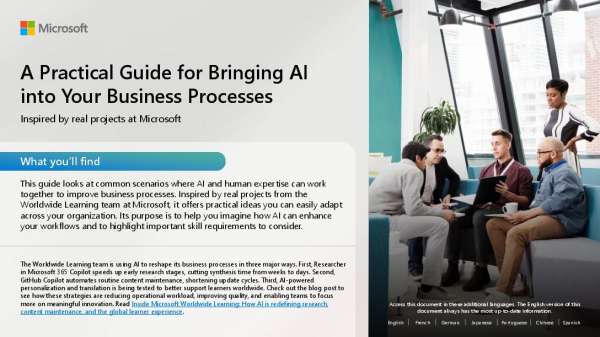
The guide consistently positions AI as a supporting partner rather than a replacement for people. In each scenario, AI handles the heavy lifting on repetitive or data-heavy tasks, while employees provide context, judgment, and final decisions.
Here’s how that balance looks in practice:
1. HR & onboarding (Research)
- AI-led: Researcher in Microsoft 365 Copilot surfaces relevant job descriptions, historical onboarding documents, and competency models, then drafts onboarding plans and flags missing components.
- Human-led: HR leaders and team leads define responsibilities, success metrics, and cultural expectations, then review and refine AI drafts for accuracy, cultural alignment, and policy compliance.
Impact: Early research and synthesis stages are shortened from weeks to days, while HR still owns the quality and fit of the final plans.
2. Sales enablement content (Content management)
- AI-led: GitHub Copilot flags potentially outdated assets, suggests content changes, recommends tone and structure adjustments for different personas, and helps with tagging and formatting.
- Human-led: Sales and marketing teams decide what needs updating, define persona-specific value propositions, validate brand voice and accuracy, and manage stakeholder alignment and approvals.
Impact: Routine content maintenance is automated, shortening update cycles and freeing teams to focus on strategy and messaging quality.
3. Localization and personalization (Translation & personalization)
- AI-led: Copilot produces initial localized versions, adapts language and tone for regions, formats assets, and ensures metadata consistency. Researcher flags translation gaps and tone mismatches and tags content by market and audience.
- Human-led: Marketing managers and regional leads define audiences and markets, provide cultural context, validate accuracy and brand fit, and decide on channels and formats.
Impact: AI accelerates translation and formatting, while local experts ensure content is culturally appropriate and trustworthy.
Across all scenarios, the guide emphasizes that new skills are needed: prompt refinement, secure AI practices (especially for sensitive HR data), industry expertise to validate AI outputs, and familiarity with regional norms. Building or bringing in AI expertise is presented as a way to help teams move faster while keeping humans firmly in control of outcomes.




 Sign in with LinkedIn